Indoor Water Feature Removed and Rebuilt With Herringbone Engineered Wood Floor
Some homes have features that made sense at one point but just don't anymore. An indoor water feature sitting in the middle of a living room floor is a perfect example. When it's time for it to go, you're not just dealing with demo - you're dealing with everything underneath it too, and that's where most contractors cut corners.
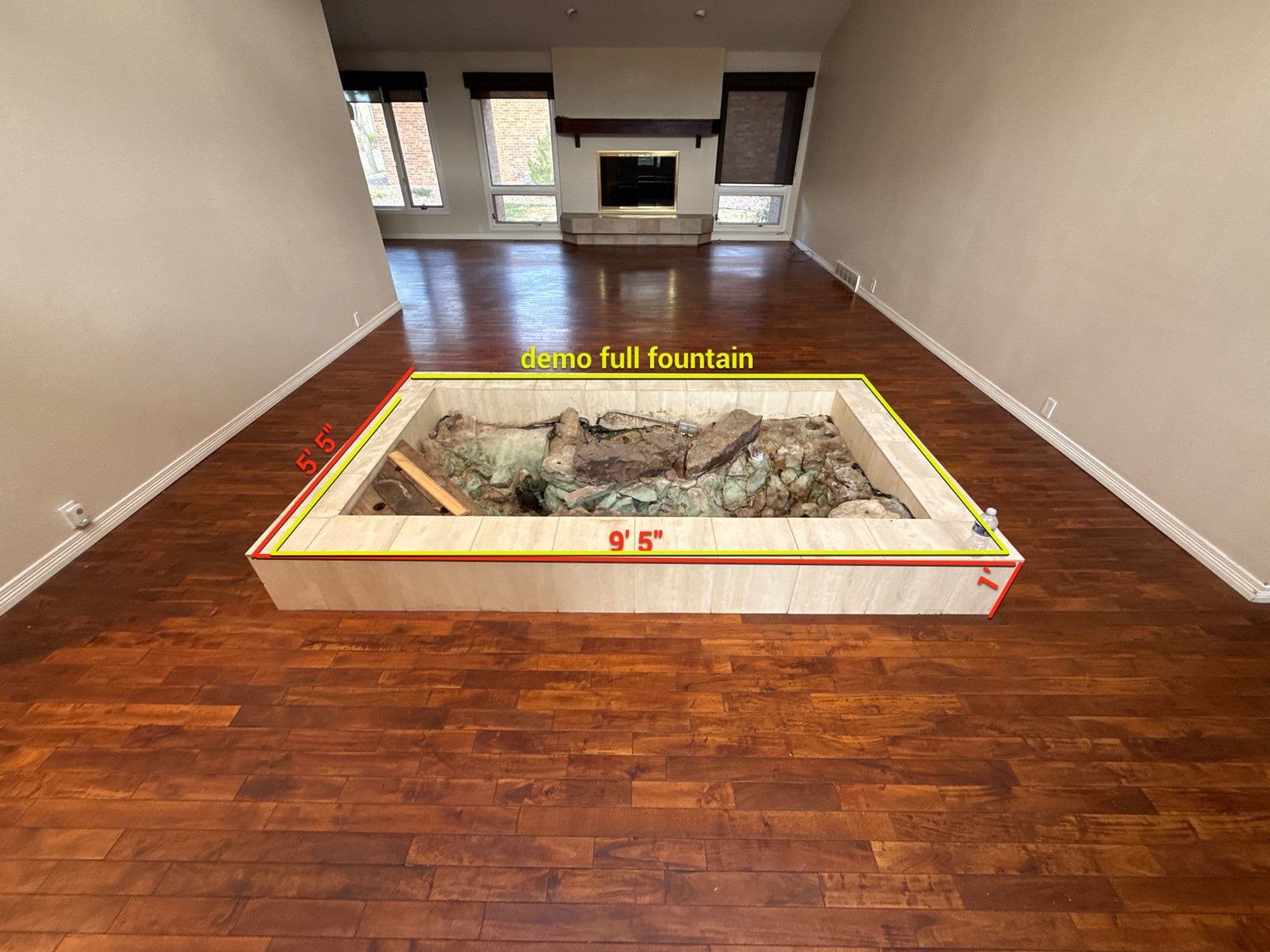
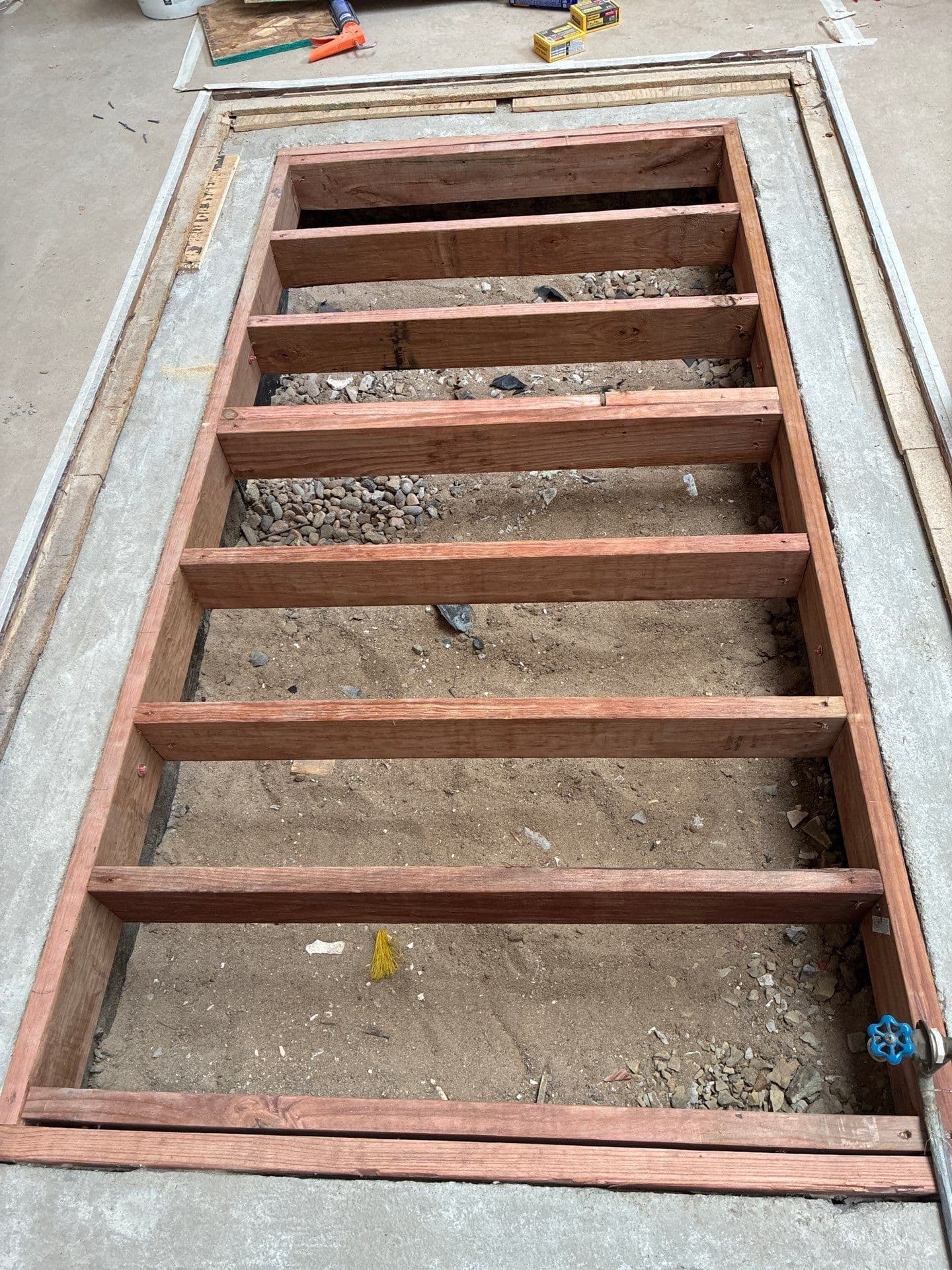
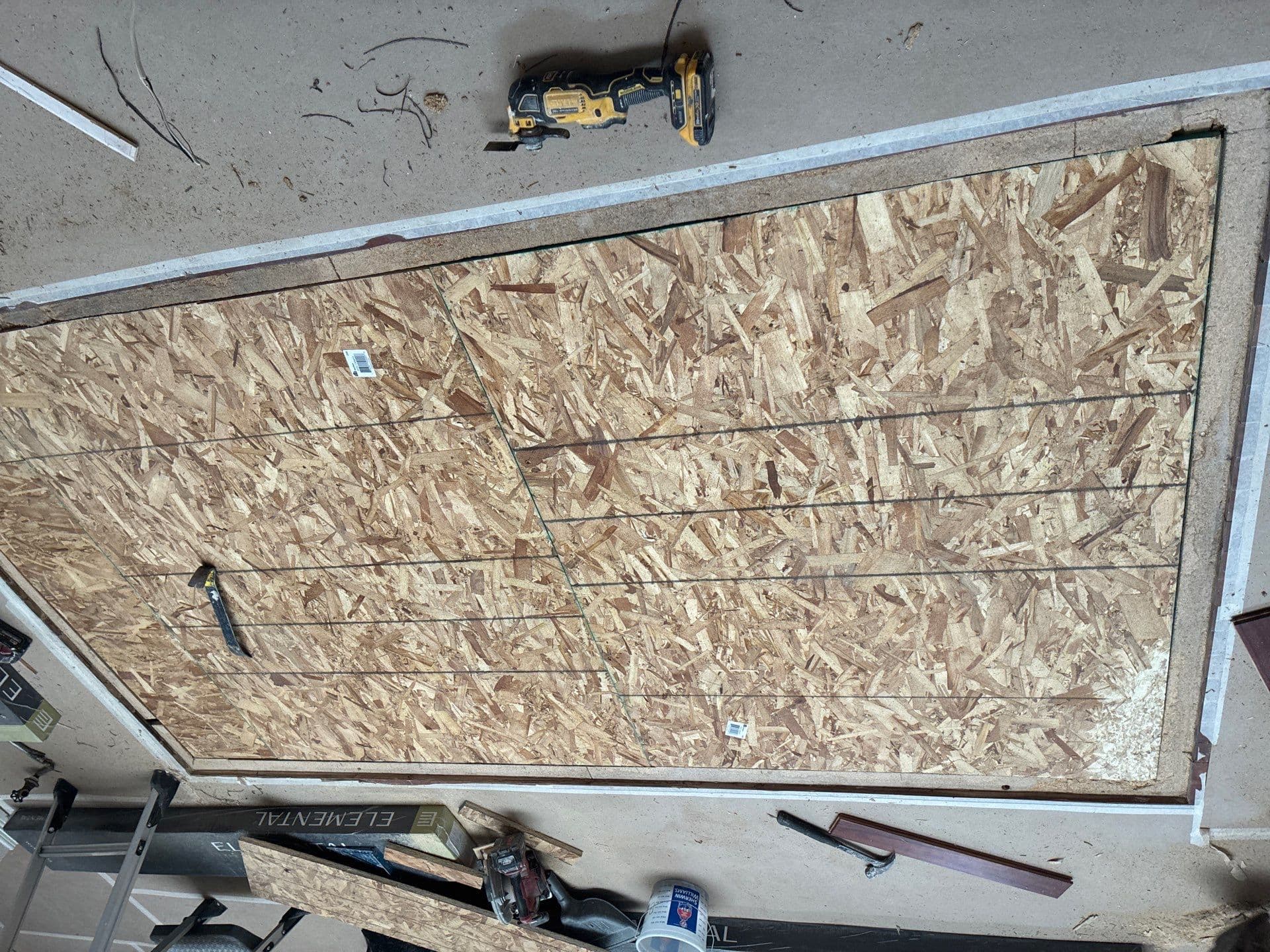
Here's what we were working with: a roughly 9-and-a-half by 5-and-a-half foot fountain basin sitting recessed into the floor, surrounded by existing hardwood. Getting rid of it meant a full demo of the structure, then building the subfloor back up from scratch. We framed out the cavity with pressure-treated lumber, got the joists spaced properly, then sheeted it solid with OSB to match the height and integrity of the surrounding floor. It had to be right before a single piece of flooring went down.
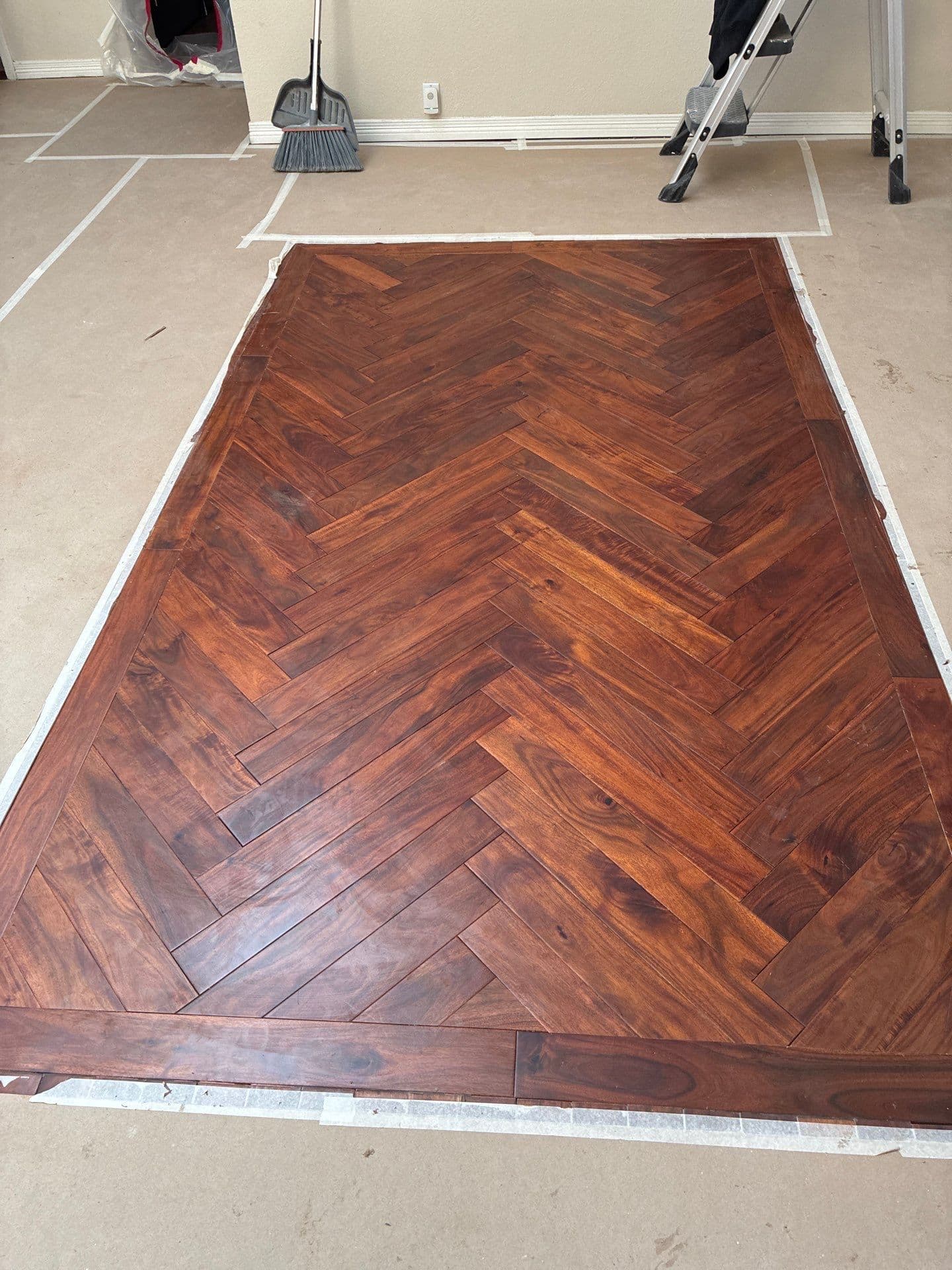
The flooring choice made this job especially interesting. Instead of running the engineered wood in a standard straight lay - which honestly would have made the patch obvious - we went with a herringbone pattern. That decision was deliberate. The 45-degree angled layout draws the eye across the whole surface rather than along it, which naturally disguises where the old fountain ended and the new floor begins. That's not just a style choice. It's a technical one.
The end result is a floor section that looks like it was always meant to be there. No patch lines, no obvious transitions, no giveaways. When a repair is done right, it shouldn't look like a repair - and that's exactly the standard we hold ourselves to on every job. Demolition, framing, and flooring installation all handled under one roof, start to finish.
Jobs like this are a good reminder that floor repairs are rarely just about the floor. There's usually structural work involved before you ever get to the finish surface. That's why it matters who you call.